India’s Die & Mould Market to Reach New Heights by 2030
India's die & mould market is projected to double to $7.5 billion by 2030, driven by EV, electronics, and defence demand; the India Die & Mould Show (08–10 Oct, Lucknow) with 250+ exhibitors will bridge technology gaps through global machinery showcases, a Tooling Technology Summit, and a buyer-seller meet aimed at making Indian tool rooms globally competitive.
 Admin
📅 June 1, 2026
⏱️ 8 min read
💬 0
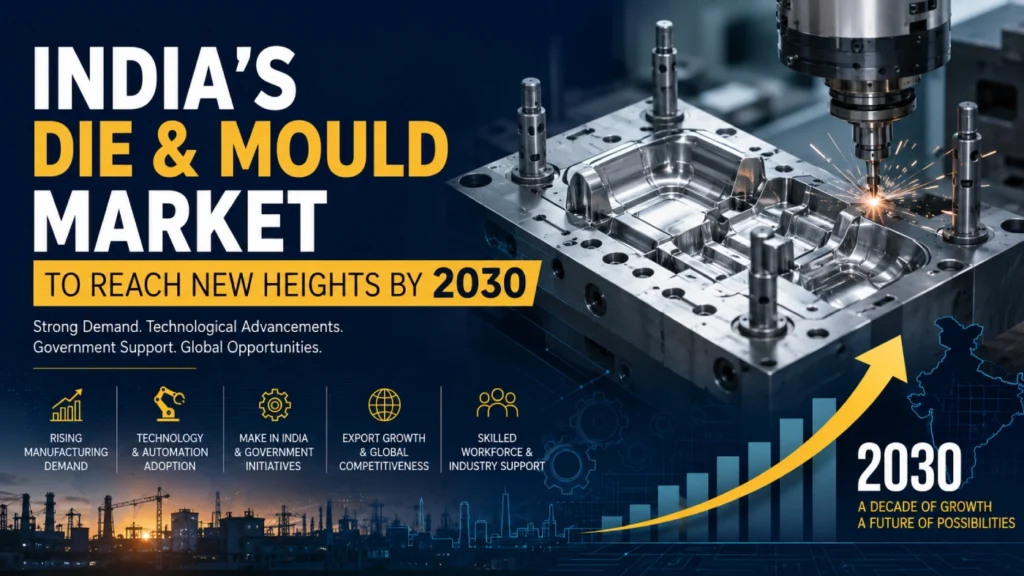
LUCKNOW — As India’s manufacturing engine powers ahead on the back of flagship initiatives like Make in India, Production-Linked Incentive (PLI) schemes, and global supply chain diversification, the unsung enabler of every factory floor — the die and mould industry — is poised for a transformative leap. The India Die & Mould Show (IDMS) 2026, scheduled to be held from 08 to 10 October 2026 at the Indira Gandhi Pratishthan, Lucknow, will bring together the entire tooling ecosystem to chart a roadmap for the sector’s growth. The central theme: “India’s Die & Mould Market to Reach New Heights by 2030.”
The three-day event, expected to draw over 250 exhibitors and 5,000-plus trade visitors, arrives at a critical juncture. India’s die and mould market, currently valued at approximately $3.5 billion, is projected to cross $7.5 billion by 2030, fuelled by surging demand from the automotive, consumer electronics, packaging, medical devices, aerospace, and defence sectors. The show will serve as the definitive platform for mould makers, die casters, tooling technology providers, raw material suppliers, and end-user industries to converge, connect, and collaborate.
“The die and mould industry is the mother of all manufacturing. Every plastic component, every metal pressing, every casting – from a car bumper to a smartphone chassis, from a syringe to an aircraft turbine blade – begins with a mould or a die. If India wants to become a global manufacturing hub, its tooling industry must be world-class in precision, speed, and cost. IDMS 2026 is where that ambition meets action,” said [Name], President of the Tool & Gauge Manufacturers Association of India (TAGMA), which is the apex body for the sector.
The ‘Mother Industry’ Gets Its Due
For decades, India’s die and mould sector operated in the shadows, dominated by micro, small, and medium enterprises (MSMEs) with limited technology access. However, the sector is now witnessing a structural upgrade driven by several forces:
- Automotive Demand: The shift to electric vehicles (EVs) is creating new tooling requirements — larger underbody structural castings (giga-castings), battery pack housings, and lightweight composite moulds. With India approving 12 semiconductor fabrication and packaging projects and multiple EV manufacturing mega-investments, the tooling spinoff is substantial.
- Electronics and White Goods: The PLI schemes for electronics manufacturing and white goods have catalysed local production of moulded components — air conditioner parts, LED TV bezels, and smartphone bodies — driving demand for high-cavitation, precision plastic injection moulds.
- Packaging and Medical Devices: Rising consumption, e-commerce, and healthcare spending are boosting demand for thin-wall packaging moulds, PET preform moulds, and medical-grade cleanroom moulding tools.
- Aerospace and Defence: The indigenisation push in defence manufacturing, including the recent ‘Suryastra’ rocket system and advanced radars, requires complex tooling for composite lay-ups, precision casting dies, and sheet metal forming tools.
“We are at a tipping point. The market is ready to double in value in less than four years. But we need technology, skilled manpower, and a shift in mindset from job-work to design-led, high-value tooling. IDMS 2026 will be the catalyst for that transformation,” the TAGMA President added.
What to Expect at India Die & Mould Show 2026
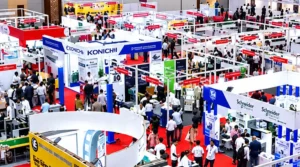
The Indira Gandhi Pratishthan in Lucknow, one of North India’s premier convention venues, will host a comprehensive showcase spanning the entire die and mould value chain. Key exhibit categories include:
- Mould Making and Tooling: Injection moulds, blow moulds, compression moulds, die casting dies, press tools, jigs and fixtures, and precision tooling for automotive, packaging, medical, and consumer goods.
- Die Casting and Foundry Tools: High-pressure die casting (HPDC) dies, gravity die casting tools, and low-pressure die casting systems, with a special focus on large structural aluminium dies for EV platforms.
- CAD/CAM/CAE and Industry 4.0 Solutions: Advanced mould design software, simulation tools for flow, cooling, and warpage analysis, and digital twin technologies that predict tool life and optimise cycle times.
- Machinery and Equipment: CNC machining centres, high-speed milling machines, EDM (electrical discharge machining), wire-cut machines, 3D metal printing for conformal cooling inserts, and automated polishing systems.
- Raw Materials and Consumables: Tool steels, mould bases, hot runner systems, ejector pins, guide pillars, and specialty coatings (PVD, CVD) for extended tool life.
- Metrology and Quality Assurance: 3D coordinate measuring machines (CMM), optical scanners, laser trackers, and in-line inspection systems for micron-level accuracy.
- Skill Development and Training: Live demonstrations by master craftsmen, apprenticeship programmes, and partnerships with ITIs and polytechnics.
International pavilions from Germany, Japan, South Korea, Taiwan, and China are expected, bringing cutting-edge tooling technologies to the Indian market. Germany’s tool and mould industry, known for its high-speed machining and precision capabilities, will have a significant presence, while Japanese and South Korean suppliers will showcase advanced hot runner systems and high-cycle mould technologies.
Why Lucknow? The Rising Manufacturing Arc
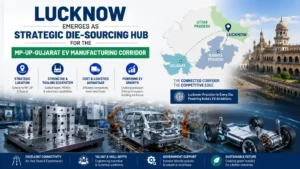
The choice of Lucknow as the host city is deliberate and strategic. Uttar Pradesh, India’s most populous state, is rapidly emerging as a major manufacturing destination. The state government has actively courted investment in electronics, defence, and automotive sectors. The upcoming Defence Industrial Corridor spanning Bundelkhand, the expanding Noida-Greater Noida electronics cluster, and the Purvanchal Expressway connecting eastern UP to the heartland are all creating a new manufacturing geography.
“Lucknow is at the centre of a vast, underserved industrial belt. Tooling demand from the surrounding MSME clusters – Moradabad for metal crafts, Kanpur for leather and engineering, Agra for foundries, and Noida for electronics – is immense. Bringing the India Die & Mould Show here democratises access to world-class technology for thousands of small manufacturers,” said a senior official from the Uttar Pradesh State Industrial Development Authority (UPSIDA).
The state government is extending support to the event, viewing it as a means to attract tooling investments that can anchor larger manufacturing projects.
Skilling the Next Generation
A critical barrier to the industry’s growth is the severe shortage of skilled toolmakers, mould designers, and CNC programmers. IDMS 2026 will feature a dedicated ‘Skills and Careers Pavilion’, where aspiring toolmakers can interact with master craftsmen, witness live tool-making competitions, and explore certified training programmes. The TAGMA-affiliated training institutes will offer on-the-spot registration for diploma and certification courses.
“A single complex mould can take 3,000 hours of skilled labour to produce. India has the demographic dividend; what it needs is precision training. The show will connect young talent with the masters of the craft,” the event spokesperson said.
Exports: The $3 Billion Opportunity
India currently exports dies and moulds worth approximately $900 million, a fraction of the global tooling market. With supply chain realignments, Indian tool rooms have an opportunity to significantly increase their share. Markets in the Middle East, Africa, Southeast Asia, and even Eastern Europe are looking for reliable, cost-competitive tooling sources beyond China. IDMS 2026 will host an International Buyer-Seller Meet, with confirmed delegations from Nigeria, Kenya, Vietnam, Turkey, and the UAE.
“Every exported die is an advertisement for India’s manufacturing capability. If we can deliver precision tools, the same customer will trust us with full-scale component production,” the TAGMA President noted.
Looking Ahead to October
The India Die & Mould Show 2026, set against the grand backdrop of the Indira Gandhi Pratishthan in Lucknow from 08 to 10 October, is more than a trade exhibition. It is a statement of intent from an industry that has quietly built the foundations of India’s manufacturing growth and now stands ready to claim its place on the global stage.
For mould makers, die casters, tool designers, and the end-user industries that depend on them, the path to a $7.5 billion market by 2030 begins here. When the doors open in Lucknow this October, the die will be cast — quite literally — for the next chapter of Indian precision engineering.

Related Articles